IDM mean in text is a popular slang abbreviation you might see in messages and social media chats.
It stands for “I Don’t Mind,” and it’s a casual, friendly way to show that you’re okay with a choice or suggestion.
We often use it to keep conversations light, flexible, and easy going without typing a full sentence.
In this article, we’ll explain what IDM means, how to use it, and give real examples so you can text like a pro.
🧠 What Does IDM Mean in Text?
IDM = I Don’t Mind.
People use it to show agreement, willingness, or neutrality in a casual conversation.
It’s a short and polite way to indicate that you’re fine with any option or suggestion.
Example sentence:
A: “Do you want pizza or sushi for dinner?”
B: “idm, whatever you feel like 😄”
In short: idm mean in text = I Don’t Mind = expressing that you’re okay with the choice or suggestion.
📱 Where Is IDM Mean in Text Commonly Used?
You’ll see IDM in many casual texting and social media spaces:
- 📲 Text messages with friends or family
- 👻 Snapchat chats
- 📸 Instagram DMs or comments
- 🎥 TikTok captions or replies
- 🎮 Gaming chats or Discord servers
Tone: Very casual, friendly, and social-media–friendly. It’s not suitable for formal communication, but perfect for informal conversations and playful exchanges.
💬 Examples of IDM Mean in Text in Conversation
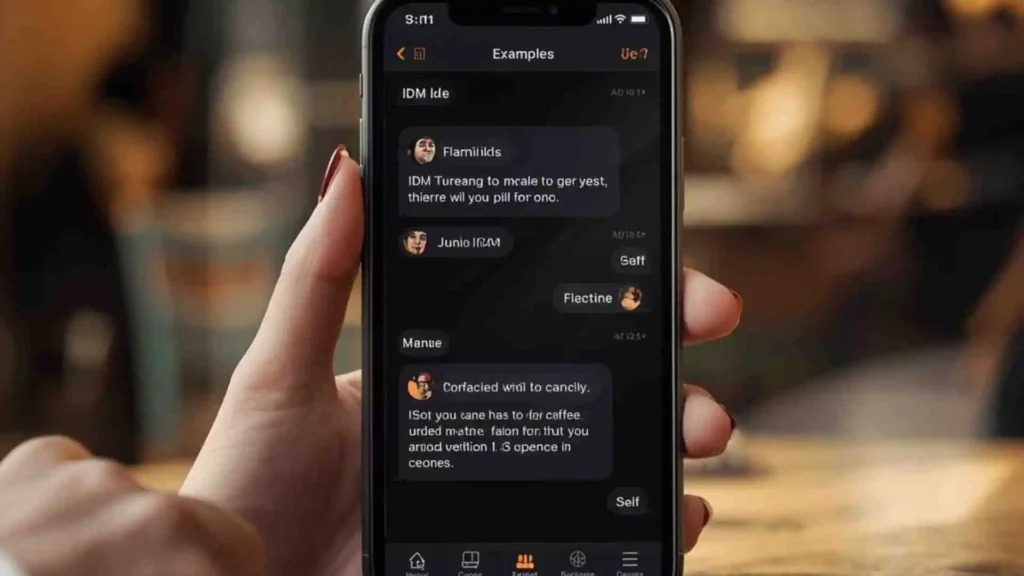
Here are realistic examples of IDM in chats:
1️⃣
A: “Do you want to meet at 5 or 6?”
B: “idm, either works for me 🙂”
2️⃣
A: “Should we watch a movie or play a game?”
B: “idm, your choice 🎮”
3️⃣
A: “Do you want coffee or tea?”
B: “idm, I’m good with both ☕🍵”
4️⃣
A: “Do you want to go to the park or stay home?”
B: “idm, let’s just see how the weather goes 🌤️”
5️⃣
A: “Do you want me to pick a song?”
B: “idm, surprise me 🎶”
6️⃣
A: “Do you want to go out tonight?”
B: “idm, I’m fine either way 😄”
🕓 When to Use and When Not to Use IDM Mean in Text
✅ When to Use
- Casual chats with friends or family
- Social media discussions
- Expressing neutrality or willingness
- Giving someone the freedom to choose
❌ When Not to Use
- Professional or work emails
- Serious or urgent conversations
- School or formal assignments
- Situations where a clear answer is required
Context Comparison Table
| Context | Example Phrase | Why It Works |
| Friend Chat | “idm, whatever you prefer 😄” | Casual & friendly |
| Work Chat | “I’m okay with either option” | Polite & professional |
| “Please choose whichever works best” | Formal & clear |
🔄 Similar Slang Words or Alternatives
| Slang | Meaning | When to Use |
| np | no problem | Casual response to thanks |
| yw | you’re welcome | Friendly reply |
| idc | I don’t care | Informal, expressing no preference |
| tbh | to be honest | Sharing honest opinion |
| lol | laughing out loud | Lighthearted, casual |
❓ FAQs About IDM Mean in Text
Q1: Is IDM rude?
No, it’s polite and casual, showing flexibility or neutrality.
Q2: Can IDM be flirty?
It can, if used in playful contexts, but generally it’s neutral.
Q3: Is IDM suitable for school or work chats?
Only in informal contexts with classmates or colleagues you know well. Avoid in formal communication.
Q4: Can IDM have multiple meanings?
Mostly it means “I Don’t Mind”, but context can slightly change the tone from casual to polite.
Q5: How do people emphasize IDM?
By adding emojis or extending sentences, e.g., “idm 😄” or “idm, really your choice!”
🌟 Conclusion
Now you know exactly what IDM means when it shows up in texts or social media chats.
This simple abbreviation helps you communicate flexibility, politeness, and friendliness without typing long sentences.
Whether you’re choosing a place to hang out, deciding on a game, or responding casually online, IDM keeps your messages light, easy going, and relatable.
Remember to use it in the right context: casual conversations with friends and social media are perfect, while formal situations call for full words.
Also Check These Posts
- What Does LMSS Mean in Text | Quick Explanation for Beginners for 2026
- What Does FMO Mean in Text | Quick Meaning and Usage Tips for 2026

I am James Warth, a writer at Meaning.com where I publish clear and insightful articles focused on meanings, definitions, and language usage. I enjoy breaking down complex words and phrases into simple explanations that anyone can understand. My goal is to help readers learn, explore, and use language with confidence in everyday life.
Books
-
The Meaning Behind Words
-
Everyday Terms Explained