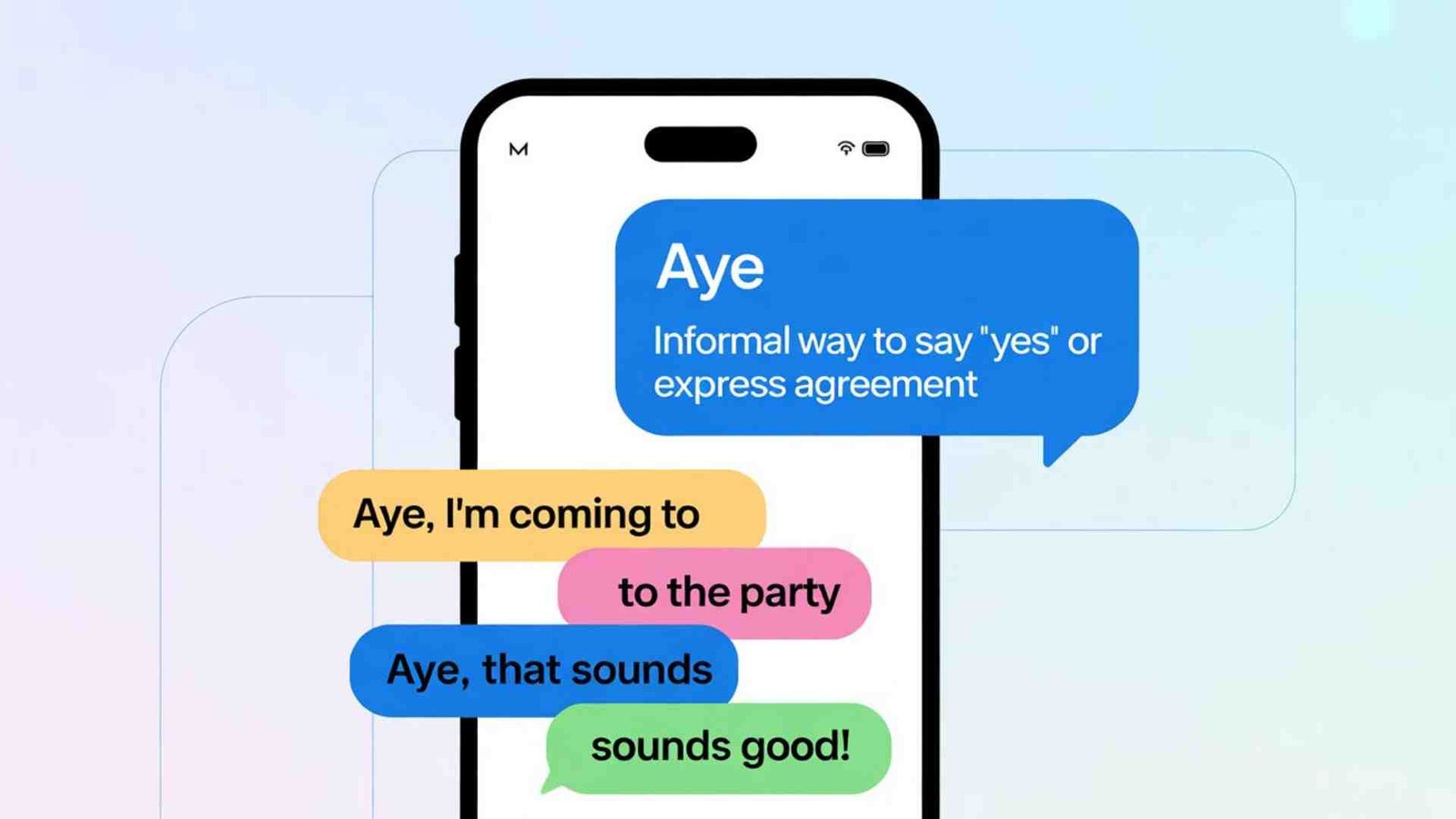
What does aye mean in text is a question many people ask when they see this short reply pop up in chats or social media.
It’s commonly used to show agreement, acknowledgment, or understanding without typing a long response.
Depending on context, aye can sound relaxed, confident, or even a little playful.
In this article, we’ll break down what aye means in text so you can use it naturally and understand it every time.
What Does “What Does Aye Mean in Text” Mean in Text?
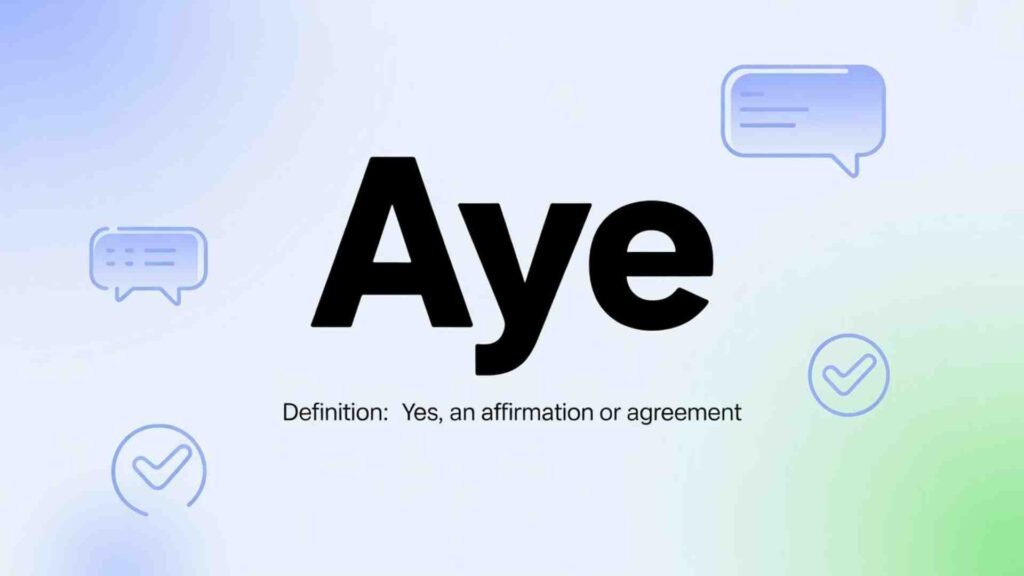
In texting, aye is most commonly used as an informal way to say yes or okay.
It signals agreement, understanding, or approval without sounding stiff or formal.
The tone can feel relaxed, friendly, or even a little flirty depending on the conversation.
For example, if someone asks, “you coming tonight?” and you reply “aye,” you’re simply saying yes in a laid-back way.
In short: what does aye mean in text = yes / yeah = agreement or acknowledgment.
Where Is “What Does Aye Mean in Text” Commonly Used?
You’ll see aye across many casual digital spaces, especially where quick replies matter:
- 📱 Text messages & DMs – fast, informal responses
- 📸 Snapchat & Instagram – captions, replies, reactions
- 🎵 TikTok comments – showing agreement or hype
- 🎮 Gaming chats – quick confirmation or readiness
Tone check:
- ✔️ Casual and social-media–friendly
- ❌ Not formal or professional
- ✔️ Great for friends, peers, and relaxed conversations
Examples of What Does Aye Mean in Text in Conversation
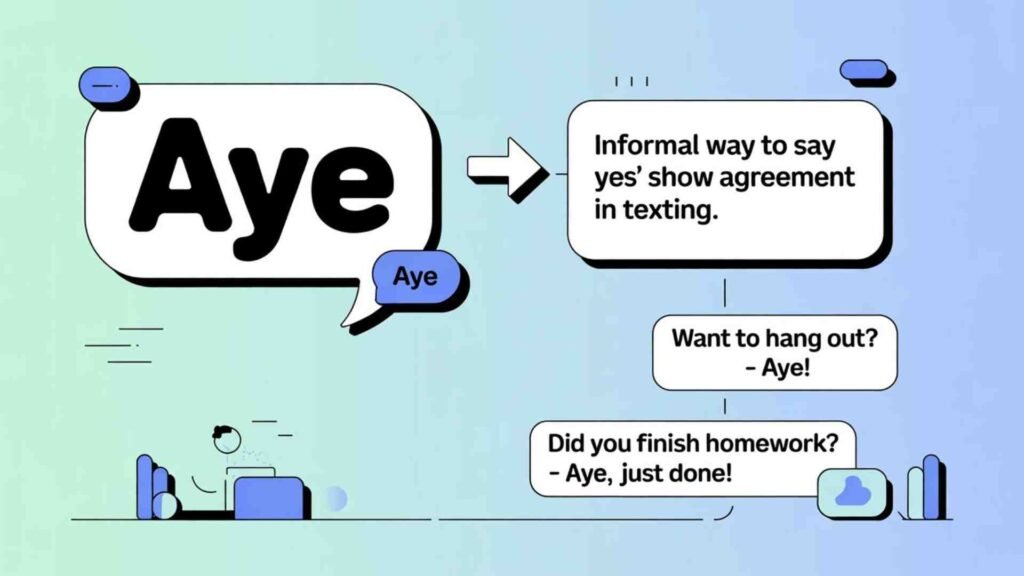
Here’s how aye looks in real-life chats 👇
Example 1
A: Wanna grab food later?
B: aye 🍔
Example 2
A: Did you understand the assignment?
B: aye, got it 👍
Example 3
A: movie night tonight?
B: ayeee 😄
Example 4
A: Are you still up?
B: aye 👀
Example 5
A: that song is fire
B: aye fr 🔥
Example 6
A: be ready by 8
B: aye boss 😅
When to Use and When Not to Use What Does Aye Mean in Text
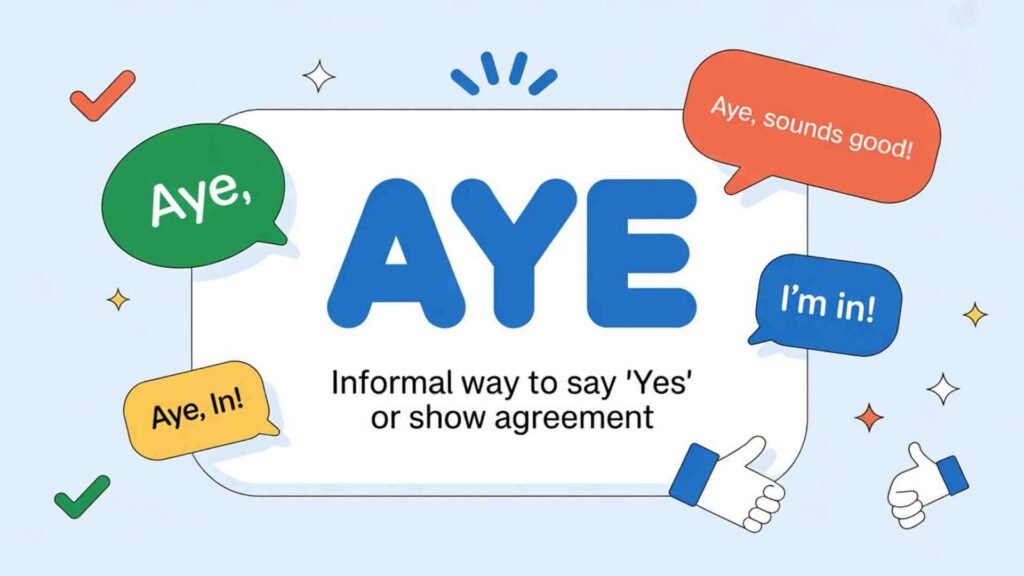
✅ When to Use
- Chatting with friends or classmates
- Casual group chats or DMs
- Gaming or social media conversations
- Light, playful, or relaxed moments
❌ When Not to Use
- Work emails or professional chats
- Serious or emotional conversations
- Formal requests or instructions
- Talking to someone who prefers clear, standard language
Context Comparison Table
| Context | Example Phrase | Why It Works |
| Friend Chat | “aye 😄” | Casual & friendly |
| Group Chat | “aye got it” | Quick confirmation |
| Work Chat | “Yes, I understand.” | Professional tone |
| “I agree and will proceed.” | Clear & formal |
Similar Slang Words or Alternatives
If aye isn’t your style, here are some popular alternatives:
| Slang | Meaning | When to Use |
| yeah | yes / agree | Everyday texting |
| yup | yes | Friendly, casual |
| ok | acknowledgment | Neutral situations |
| bet | agreed / sure | Confident, slangy |
| fr | for real | Strong agreement |
| mhm | yes / I hear you | Soft confirmation |
FAQs About What Does Aye Mean in Text
Is aye rude in texting?
No. It’s usually friendly or neutral, just informal.
Can aye be flirty?
Yes! With emojis or tone, it can feel playful or suggestive.
Does aye always mean yes?
Most of the time, yes but context matters. Sometimes it just means “I hear you.”
Is aye used worldwide?
Yes. It’s especially common in casual English across different regions.
Can I use aye with strangers?
It’s okay in casual online spaces, but not ideal for formal first impressions.
Conclusion
So, if you’ve been wondering what does aye mean in text, now you know it’s a simple, casual way to say yes, okay, or I agree.
It keeps conversations light, fast, and friendly, especially in texting and social media chats. Just remember to match the tone to the situation and the person you’re talking to.
Try it out, add an emoji if it fits, and let your messages feel more natural and relaxed. Aye, you’ve got this 😉
Also Check These Posts
- What Does DWBI Mean in Text | Clear Meaning for Everyday Readers 2026
- What Does SMD Mean in Text | Clear and Simple Meaning Explained for 2026
- What Does fsu Mean in Text | Explained in Simple Words for 2026

Kristin Hannah
Born in 1975 in Steventon, England, Austen lived a relatively quiet life in the English countryside. She published her works anonymously during her lifetime, and they remain as relevant in 2025 as they were in the 19th century, frequently inspiring new film and TV adaptations.