What does SMT mean in text is a question many people ask when they spot this short slang in a message and feel confused.
You’re not alone, text abbreviations can be tricky if you don’t see them every day.
In simple terms, SMT usually stands for “something,” making it a quick and casual way to type faster.People often use it in relaxed chats with friends or on social media.
In this article, we’ll break down what SMT means in text, along with its similar shortcuts, so you always get the message.
🧠 What Does SMT Mean in a Text?
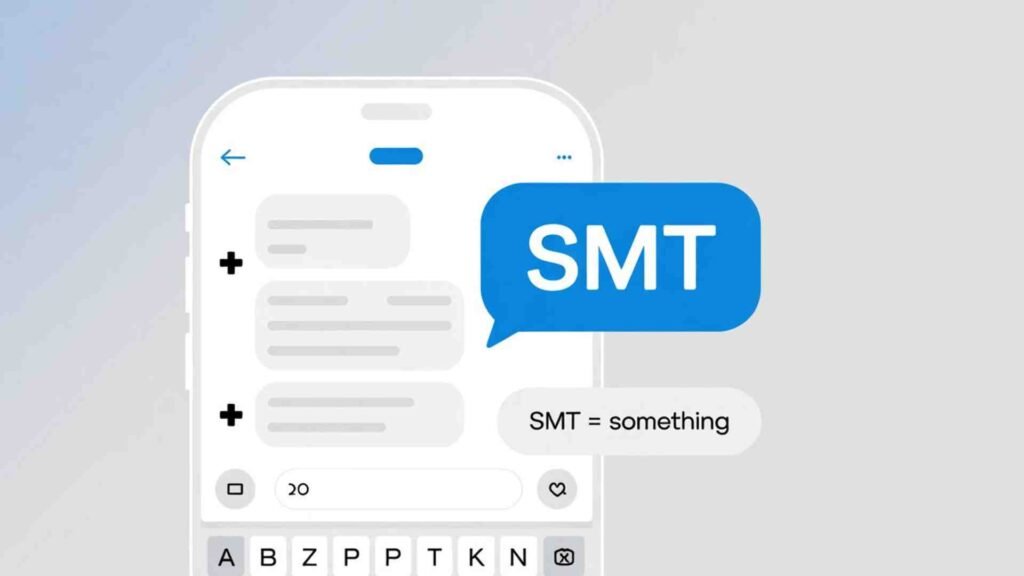
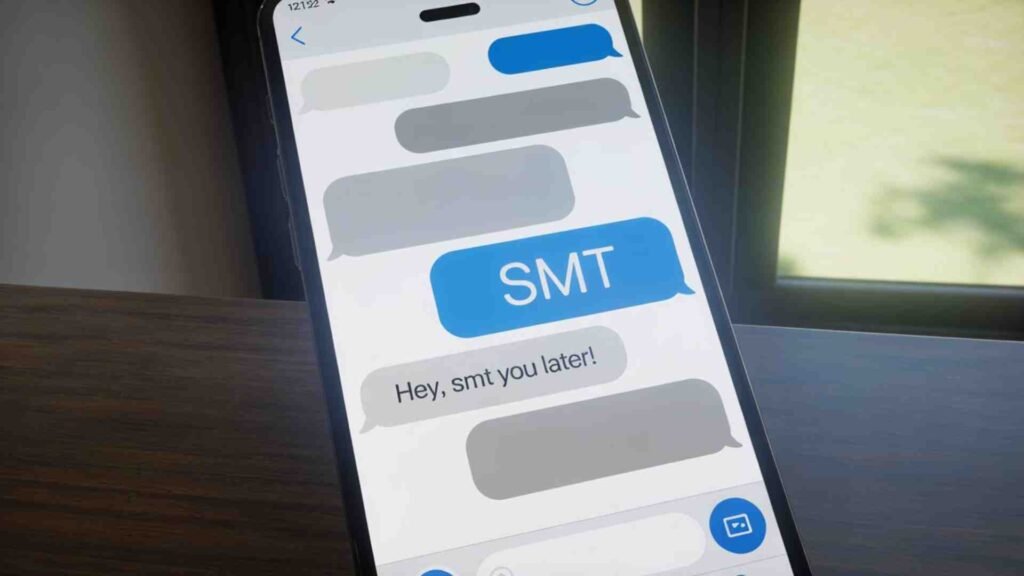
In texting and social media, SMT is simply a shortened form of the word “something.”
People use it to type faster, especially in casual conversations where perfect spelling isn’t important.
For example:
👉 “can you tell me smt important?”
It doesn’t change the meaning of the sentence—just makes it quicker and more relaxed.
In short: what does smt mean in a text = something = a casual shortcut for everyday chats.
📱 Where Is SMT Commonly Used?
You’ll mostly see SMT in informal, online spaces where speed matters more than grammar:
- 📱 Text messages with friends or family
- 💬 Snapchat & Instagram DMs
- 🎵 TikTok comments and replies
- 🎮 Gaming chats & Discord servers
- 🧑🤝🧑 Casual group chats
Tone check:
✔ Casual and friendly
❌ Not formal or professional
✔ Social-media–friendly and relaxed
💬 Examples of SMT in Text Conversations
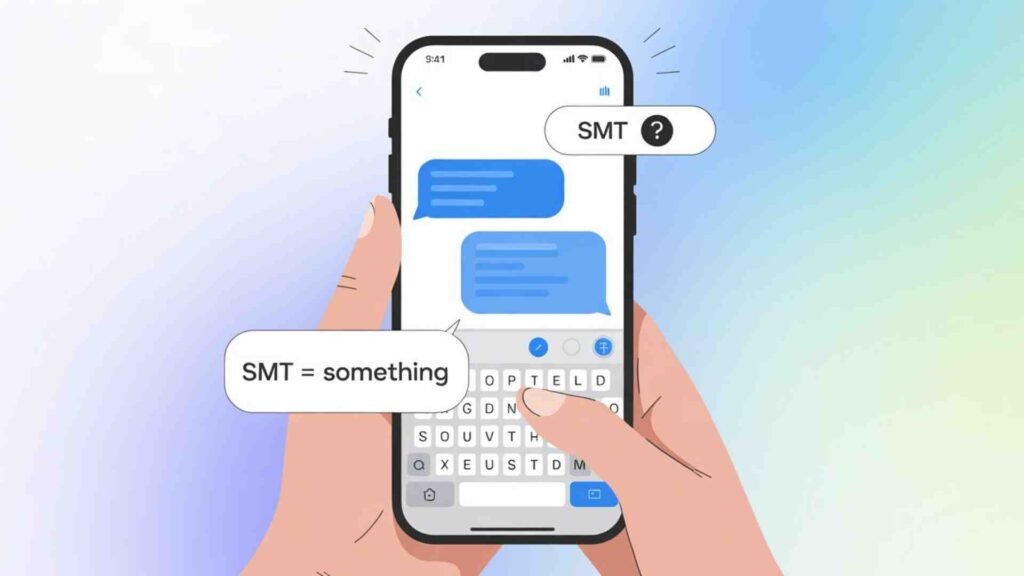
Here are some real-life style examples showing how SMT fits naturally into chats:
A: im bored 😩
B: let’s do smt fun
A: You wanted to tell me smt?
B: yeah but later lol
A: Can you grab smt from the store?
B: sure 👍
A: smt feels off today
B: same tbh 😅
A: say smt nice
B: you’re awesome 😄
A: I need smt to eat
B: ordering pizza 🍕
🕓 When to Use and When Not to Use SMT
✅ When to Use SMT
- Casual chats with friends
- Relaxed conversations on social media
- Quick replies where speed matters
- Informal group chats or gaming chats
❌ When Not to Use SMT
- Work emails or office chats
- School assignments or essays
- Formal messages or professional texts
- Serious or sensitive conversations
Context Comparison Table
| Context | Example Phrase | Why It Works |
| Friend Chat | “tell me smt funny 😄” | Casual & relaxed |
| Group Chat | “we should do smt tonight” | Natural & informal |
| Work Chat | “Can you explain something?” | Professional tone |
| “Please share additional information.” | Clear & formal |
🔄 Similar Slang Words or Alternatives
Here are some common alternatives to SMT and when to use them:
| Slang | Meaning | When to Use |
| sth | something | Casual typing, forums |
| sum | something | Very informal slang |
| info | information | Semi-casual chats |
| stuff | things | Everyday conversations |
| idk | I don’t know | Casual replies |
| tbh | to be honest | Expressing feelings |
❓ FAQs About What Does SMT Mean in a Text
Q1: Is SMT rude or offensive?
No, SMT is completely harmless. It’s just a shortcut for “something.”
Q2: Can SMT have another meaning?
In texting, it almost always means something. Other meanings exist in technical fields, but not in casual chats.
Q3: Is SMT okay to use with adults or teachers?
It’s better to avoid it in formal or respectful conversations. Use the full word instead.
Q4: Is SMT used worldwide?
Yes, especially among English-speaking users on social media and messaging apps.
Q5: Is SMT the same as “sum”?
Yes, both mean “something,” but SMT is more common in typed chats.
✅ Conclusion
Now that you know what does SMT mean in a text, you can read and use it with confidence.
It’s a simple, casual shortcut for “something” that fits perfectly into relaxed conversations with friends.
While it’s great for texting and social media, it’s best left out of formal messages.
Once you start noticing it, you’ll realize how often people rely on SMT to keep chats quick and easy.
Go ahead, try using it naturally in your next casual conversation.
Also Check These Posts

Kristin Hannah
Born in 1975 in Steventon, England, Austen lived a relatively quiet life in the English countryside. She published her works anonymously during her lifetime, and they remain as relevant in 2025 as they were in the 19th century, frequently inspiring new film and TV adaptations.